

 Image 1 of 1
You're in the meeting. They slide a form across the table. Everyone is watching.
You don't fully understand what you're agreeing to, but the meeting is almost over and everyone seems to be waiting. So you sign.
Later, you realize the form authorized more than what was discussed. Or the plan was drafted before the meeting started. Or your child's input wasn't included at all.
This is how compliance gets documented as consent. Not because anyone is lying but because the process is designed to move fast, and nobody gives you the questions that slow it down.
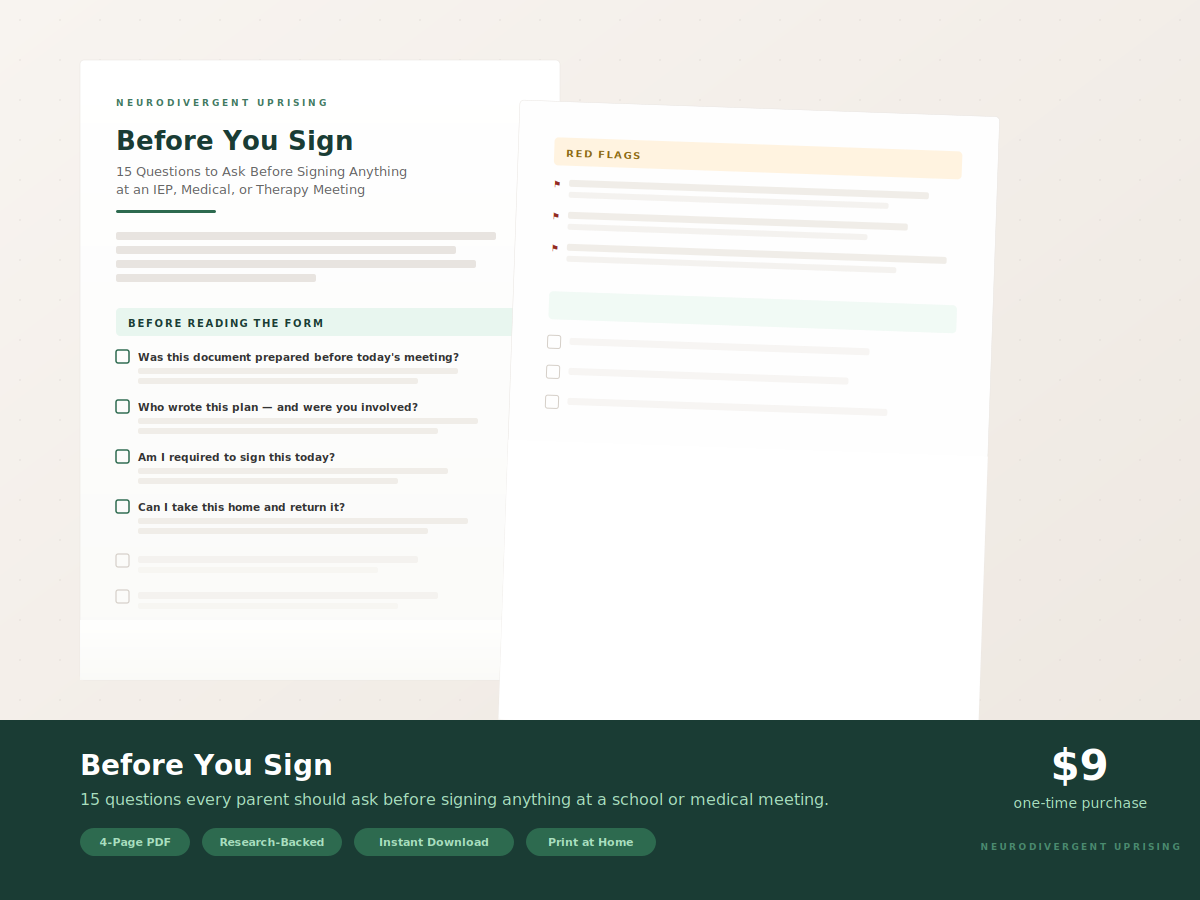
15 questions in 4 categories:
Before You Read the Form What am I actually consenting to? What happens if I don't sign? Was this written before the meeting? Can I take it home?
What You're Agreeing To Does this cover more than we discussed? Who gets my information? How long does it last? Can I consent to part and not the rest?
Checking the Power Dynamic Was my child's input included? What alternatives were considered? Who benefits from this recommendation? Are there financial conflicts?
Protecting Yourself After Get a copy before you leave. Know the exit plan. Check in with yourself: are you signing because you agree, or because you feel like you have to?
Plus: 8 red flags that signal compliance pressure — not informed consent. Your legal rights in IEP, medical, therapy, and guardianship contexts.
“The One Rule:
You are never required to sign anything in the room. You can always take it home. Anyone who pressures you to sign immediately is prioritizing their timeline over your understanding.”
Format: Printable PDF (instant download) Pages: 4 Price: $9
Print it. Bring it to the meeting. You don't need to ask all 15 — pick the 2–3 that matter most. If asking questions feels uncomfortable, that itself is information about the power dynamic in the room.